The second Thursday of March each year is the World Kidney Day. Yes, there’s a World Kidney Day. There’s also a World Heart Day. And even a World Brain Day.
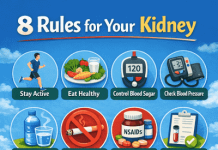
But why do we need a World Kidney Day? This post will show you why by teaching you the essential functions of the kidneys and the impact of kidney disease on populations. We will then end by giving you simple rules to live by for good kidney health.
Functions of the Kidneys
Fluid balance
The kidneys control both the volume and the pressure of fluid (water) your body contains. When body fluid is excess, the kidneys excrete the extra fluid. When body fluid is reduced, the kidneys compensate by increasing the pressure of the remaining body fluid so it can still deliver nutrients and oxygen around the body.
Waste removal
The kidneys remove waste materials and toxic substances out of the body in urine. This includes natural waste products like urea (a product of protein metabolism) and other wastes like medications and chemicals.
Regulation of minerals
Minerals or electolytes like sodium and potassium levels are also regulated by the kidneys and can affect kidney funtion. Generally the kidneys’ tendency is to prevent loss of sodium from the body. But sodium retention also leads to water retention. In health this is no matter but it can be a problem in kidney disease.
Processing Vitamin D
Vitamin D is produced in the human body and one of the stepsin its production takes placein the kidneys. Vitamin D is important in calcium aborption and function and is therefore necessary for good bone strength.
Blood production
Blood is not made in the kidneys but in the bone marrow. However, the kidneys produce a hormone called erythopoietin which stimulates bone marrow to form blood cells
Production of glucose
The kidneys, along with the liver, are a site for gluconeogenesis – the process of converting amino acids to glucose. This process is what enables us to survive the brief periods of fasting in between meals.
A Picture of Kidney Disease
Now imagine a failing kidney. It cannot perform these functions we have mentioned. Excess fluid builds up in the body. So the feet swell, and the face around the eyes, and sometimes the whole body together is bloated with fluid. Breathing is difficult. Moving is tiring. The appearance is painful. And your blood pressure skyrockets.
Minerals can’t be regulated. So some rise astronomically and others dip abysmally. Potassium rises high enough to stop the heart at once. And sodium dips low enough to swell the brain. While calcium crashes to the depths due to low vitamin D levels. This together with the high total body acid affects bone strength and makes them frail and prone to breaking.
The kidneys have failed, remember. Now toxins can’t be removed from the body. So, urea irritates every lining – the gut, the coverings of the lungs and heart, the matter of the brain. Even the surface of the skin is rendered dry, scaly and itchy by this omnipresent toxin. So sometimes you have just (though by no means ordinary) vomiting and diarrhoea, sometimes it is bloody. Sometimes you have difficulty breathing, sometimes chest pain. And sometimes even confusion, seizures and loss of consciousness.
And talk of the overwhelming fatigue due to reduced levels and possible low blood sugar!
This, and more, is the lived reality of a person with kidney disease.
Now its impact on consider populations.
The Scope of Kidney Disease
Consider these figures the World Health Organization reports: 674 million people worldwide were living with chronic kidney disease last year. This equates to about 1 in 10 adults. Half of everyone living with diabetes will have chronic kidney disease. Chronic kidney disease contributes to 1 in 10 deaths attributed to hypertension.
Moreso, because of the high costs of dialysis, in some countries where patients pay out of pocket instead of with insurance, chronic kidney disease is the leading cause of catastrophic health expenditure. I mean it commonly reduces patients to poverty. Lastly, kidney disease is a complication of many infections like malaria, hepatitis, HIV, tuberculosis and many others.
Conclusion
Mark this World Kidney Day intelligently. Take care of your kidneys. Look out for the second installation of this post to find out how.