Almost 250 years ago, Edward Jenner pioneered vaccination. He used this technique to protect American colonists from smallpox. But a much-overlooked fact is that centuries before Jenner, West Africans, Chinese, and other peoples had been practising a cruder form of immunization called variolation. This involved taking pus from lesions of infected persons during a disease outbreak and introducing it into surgically created wounds of healthy persons.
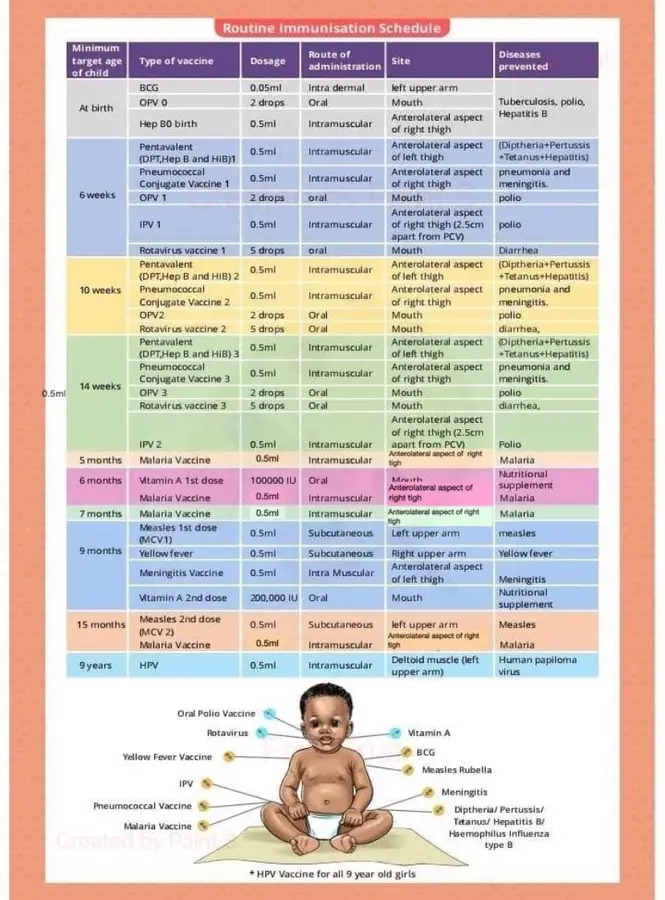
Centuries have passed since then. Vaccines have been developed against a multitude of diseases. Smallpox has been eradicated. Polio too, nearly so. Others like diphtheria, epiglottitis, and measles are on a steady decline. In fact, all countries have an immunization schedule every parent should follow, which contains the standard recommended vaccines everyone should receive and when they should get them. Most of these vaccines are free. Here is a picture of Nigeria’s latest immunization schedule designed by the National Primary Healthcare Development Agency (NPHCDA).
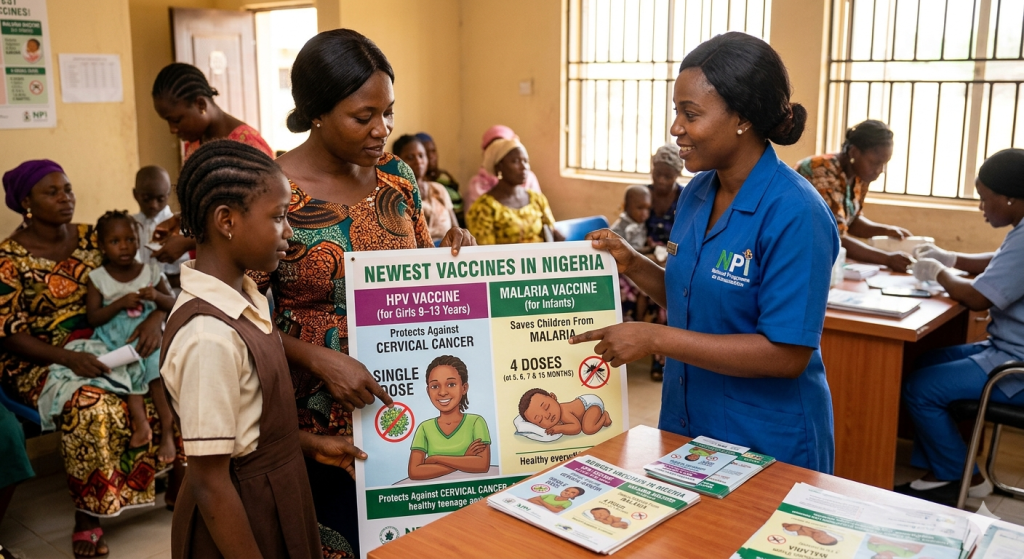
Scientists continue to develop more vaccines for more diseases. These include malaria and cervical cancer—yes, a vaccine against cancer! These two are the latest additions to Nigeria’s schedule within the past five years. This post will enlighten you on the vaccines and when to get them.
HPV Vaccine
HPV Infection and Cancer
Cervical cancer is the second most common cancer in Nigerian women, killing about 8,000 of them each year. But we know the cause of cervical cancer. The virus— (HPV)—causes more than 99% of cervical cancer cases. There are several strains of this virus. Some pose a high risk for cervical cancer, like strains 16 and 18. Others more frequently cause genital and anal warts, like strains 31 and 33.
Timing of the HPV Vaccine
In 2023, Nigeria added an HPV vaccine to its NPI schedule. The most common vaccine available covers all four strains earlier mentioned, and it is given to girls and boys as a single dose between the ages of 9–13 years.
Older females aged 14–26 years can also receive the vaccine. They will, however, need 2 or 3 doses spaced at six-month intervals.
Note also that the vaccine is best given before children become sexually active. This is because HPV is transmitted sexually, so you want to get vaccinated before infection occurs.If you are older than 26 years or already sexually active, you should get screened for HPV or precancerous lesions using a Pap smear or other methods. Also discuss with your healthcare provider whether you can still receive the vaccine.
Safety and Efficacy
The vaccines are considered very safe. The worst-case scenario—an anaphylactic reaction—is extremely rare (about 1 in a million). Other adverse effects include syncope, local swelling, and nausea. As for efficacy, the HPV vaccine reduces the risk of anogenital warts by up to 88% and precancerous lesions by about 50%.
Malaria Vaccine
Malaria – a Stubborn Plague
Do you know there is now a malaria vaccine? I cannot blame you if you don’t. Nigeria welcomed its first batch of malaria vaccines very recently, in November 2024—a very welcome development, as malaria continues to plague the nation. In 2023, Nigeria recorded over 184,000 deaths from malaria, the highest in the world, and contributed almost 30% of global cases. Hence, when testing was completed in Kenya and other African countries, the malaria vaccine was quickly deployed to Nigeria.
Timing of the Malaria Vaccine
The type of malaria vaccine available in Nigeria is given in four doses: at 5 months, 6 months, and 7 months of age, with a booster at 15 months. These vaccines are meant for children below five years of age. We do not yet have such vaccines approved for adults in Nigeria.
Safety and Efficacy
The vaccines are effective, reducing the risk of uncomplicated malaria by about 40%, severe malaria by 30%, and all-cause mortality by 14%. They are also safe, with a very low frequency of serious side effects. When combined with traditional preventive measures—such as insecticide-treated nets and clearing bushes and stagnant water—we will see better control of the plague that is malaria.
Conclusion
We have come a long way with the aid of vaccines. Vaccines can take us even further. Remember, vaccination is our heritage. So play your part. These new vaccines are available for free in most government health centres and hospitals. Go and inquire today.
Learn about the progress of global health, especially through vaccines, from our related article.