Not every fever is malaria. By fever, we simply mean a high body temperature—37.6°C and above. While malaria might serve as a good guess for the cause of almost any fever in tropical lands like Nigeria, it is not always the right answer.
The result of calling everything malaria is the abuse of antimalarials and a delay in treating the real reason for the current illness. This means the discomfort will persist because the actual offending sickness is not being treated. Even worse, this unrecognized disease may evolve into a more critical state since it is being neglected.
This post, therefore, will disclose these mimics of malaria so you can focus your attention correctly.
Symptoms of Malaria
To recognize the similarities between the diseases we’ll be discussing and malaria, you need to know what the symptoms of malaria are so you can compare intelligently. They are:
- Fever
- Headache
- Muscle and joint pains
- Vomiting
- Fatigue
In severe cases, there may be:
- Yellowness of the eyes
- Loss of consciousness
- Convulsions
- Difficulty breathing, among others.
Unmasking The Mimics
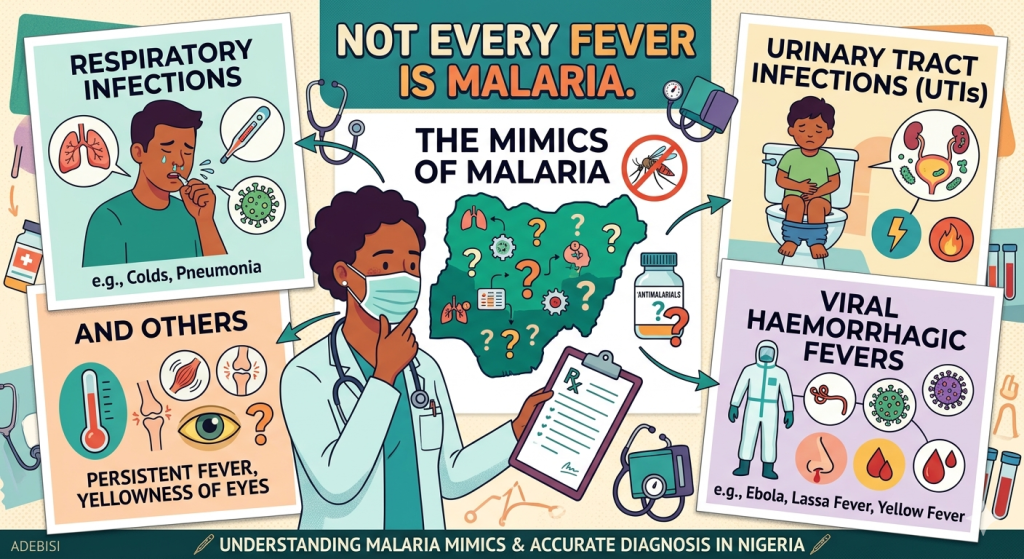
Respiratory Infections
Upper respiratory tract infections are the number one cause of clinic visits globally. And it’s more than just cough and catarrh. This disease often presents with fever, fatigue, and muscle and joint pains. But the cause is not malaria; in most cases, it is a virus like the rhinoviruses. This condition usually resolves on its own within 7–10 days.
Likewise, pneumonia is a common infection of the lower respiratory tract. It can resemble malaria, as it may present with fever associated with shivering, feeling cold, fatigue, and body pains. But it is still not malaria. You can tell because there may be additional symptoms such as cough or difficulty breathing. The treatment is antibiotics; antimalarials here would be a waste.
Urinary Tract Infections (UTIs)
This condition can also cause fever, especially in children below 5 years of age. UTIs affect almost 7% of all children under 19 years, yet they are often overlooked, with symptoms misattributed to malaria. You can suspect a UTI when there is frequent urination or a burning sensation while urinating. It is important to detect and treat UTIs early; otherwise, recurrent infections can cause kidney scarring and eventually lead to chronic kidney disease. UTIs are caused by bacteria and should be treated with antibiotics.
Viral Haemorrhagic Fevers
Have you heard of Ebola or Lassa fever? Yellow fever and dengue fever are other illnesses in this class. They are highly infectious and often fatal. Yet, so sinister of them, they present with symptoms similar to malaria: fever, body pain, and fatigue.
So you may suspect nothing until it’s too late. How then can you keep watch? Look out for any fever persisting for days despite treatment with antimalarials and antibiotics. Watch for abnormal bleeding such as nosebleeds, vomiting, or passing blood in stool. Note any fever with yellowness of the eyes, especially during an outbreak.
Widen your horizons and keep on the lookout. There are mimics about—some monstrous, none to be tolerated.
Read our post about the current Lassa fever outbreak currently ravaging Nigeria.