Introduction
How do you feel about the rainy season? Does it excite you? Unless you’re a farmer, most Nigerians, I am sure, would answer, “No.” Why? It is because this bittersweet season comes with familiar inconveniences like clothes never drying, rain embarrassing you while you commute, and, depending on your neighbourhood, possibly even flooding.
Some Nigerians worry about the increased risk of infections like malaria or the flu. But many forget to watch out for waterborne diseases. These are diseases caused when you are exposed to certain germs in contaminated water.
During the rainy season, excess water carries human and animal waste into common sources of drinking water such as rivers and groundwater. If you drink this water untreated, you can develop a waterborne disease.
Understanding what these diseases are can help us prevent them as well as recognise them early so they can be treated promptly if they do occur.
That is why this post looks at four of the commonest waterborne diseases in our setting.
1. Cholera
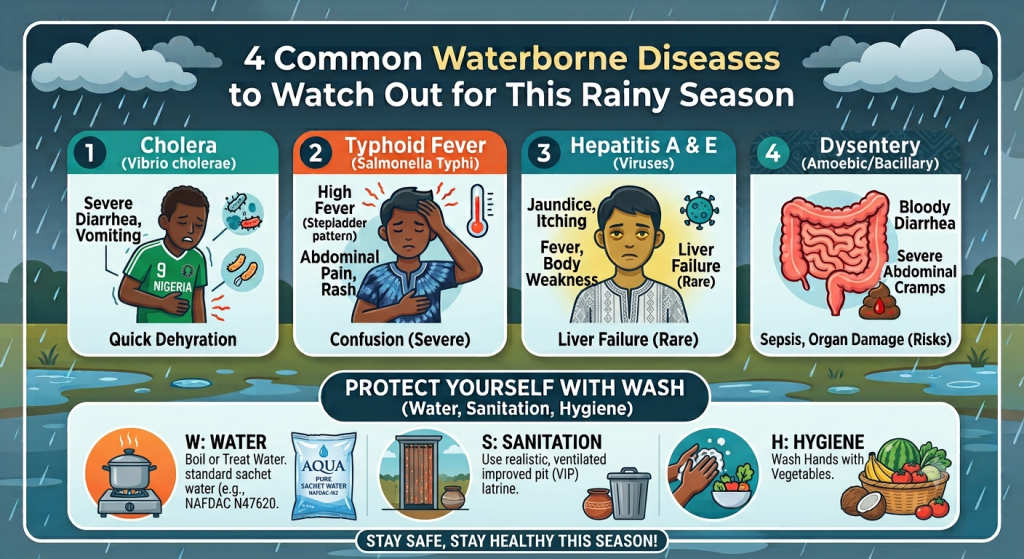
Cholera is a deadly diarrhoeal disease caused by the bacterium Vibrio cholerae. It is transmitted through contaminated food and water. Nigeria has recorded several outbreaks of cholera in recent years. As flooding continues this rainy season, we must be on the alert for more.
A person with cholera develops profuse watery stool and vomiting, leading to life-threatening dehydration. Sometimes the patient may not survive more than two days after symptoms begin if treatment is not started promptly.
Fortunately, with early rehydration using oral rehydration solution or intravenous fluids, together with antibiotics when indicated, many lives can be saved.
2. Typhoid Fever
Typhoid fever is another dangerous waterborne disease marked by fever, abdominal pain, and other symptoms. It is caused by the bacteria Salmonella Typhi and Salmonella Paratyphi. These germs are also acquired from contaminated food or water.
The disease can last for up to four weeks if not properly treated. During this time, the patient experiences a gradually increasing body temperature, called stepladder fever by doctors. This fever is commonly associated with a sensation of feeling cold and shivering. There may also be severe abdominal pain along with constipation or diarrhoea. Occasionally, the intestines may rupture—a catastrophic outcome. A rash may appear on the body. The patient may also develop difficulty breathing and even mental complications such as confusion or psychosis.
Though many Nigerians treat and worry about an entity called malaria-typhoid, the truth is that typhoid fever is not as common as you might suppose. One reason is that the test most commonly done to confirm the diagnosis of typhoid fever—the Widal test—is very inaccurate. Many quacks exploit this test to terrify patients into hospital admission and expensive treatments.
If you have been eating safe food and drinking treated water, however, you are less likely to have typhoid fever because it is primarily a food- and waterborne disease. Moreover, there are better tests to detect typhoid fever. These include bacterial cultures of the blood, stool, urine, or bone marrow.
In typhoid fever, prevention truly is better than cure.
3. Hepatitis A and Hepatitis E
Hepatitis A and hepatitis E are viruses that infect the liver and spread through contaminated food and water. They were responsible for many historical outbreaks of what was once called “epidemic jaundice.”
Symptoms include jaundice (yellowing of the eyes or skin), itching, pale stools, fever, body weakness, and muscle and joint aches. The illness usually resolves on its own within about six weeks.
In some cases, however, the disease can progress to rapid liver failure. This is particularly important in people who already have liver disease and in pregnant women, especially those infected with hepatitis E.
4. Dysentery (Amoebic or Bacillary)
Dysentery is a condition in which a person passes frequent stools containing blood, often accompanied by diarrhoea. It may be caused by bacteria such as Shigella and certain strains of E. coli. A parasite called Entamoeba histolytica is another important cause.
Contaminated water and contaminated food, including poorly cooked meat, are common means of transmission. Patients with dysentery often have bloody diarrhoea, abdominal cramps, and fever.
It is a serious disease that can lead to dangerous complications such as sepsis (when the body’s response to an infection backfires), kidney damage, liver abscess, and intestinal rupture.
Protect Yourself with the WASH Strategy
WASH stands for Water, Sanitation, and Hygiene. It is a framework promoted by UNICEF to help individuals and communities reduce the burden of diarrhoeal diseases. You can adapt it this way:
Water: Drink safe, treated, or boiled water. This means drinking only reliable brands of bottled or sachet water whenever possible. If you must drink tap water, river water, or well water, treat it first. You can treat water at home in three basic steps. First, sediment: if the water is cloudy or contains solid particles, add a coagulant such as alum or crushed moringa seeds and allow the water to settle for several hours or overnight. Carefully pour off the clearer water. Next, disinfect using sodium hypochlorite solution or water treatment tablets according to the manufacturer’s instructions. Finally, store the treated water in a clean container with a tight-fitting lid and, preferably, a tap at the bottom so you do not have to dip a cup into it.
Sanitation: Use hygienic toilets and dispose of waste safely. Never practise open defecation. Dispose of babies’ diapers correctly by emptying the faeces into the toilet first before wrapping the diaper and placing it in a separate lined container rather than directly into the general waste bin. If you choose to burn disposable diapers, remove the absorbent material first to reduce environmental pollution.
Hygiene: Wash your hands regularly with soap, especially before eating and after using the toilet. Remember also to wash fruits and vegetables thoroughly and cook food properly. Many of our crops have come into contact with wastewater in the field, either through irrigation or natural runoff.
Conclusion
WASHing will help you prevent most waterborne diseases. By practising safe water, proper sanitation, and good hygiene, you can greatly reduce your risk of infection and enjoy the rainy season in greater peace and safety.