
Introduction: The Hidden Scourge
Hepatitis is inflammation of the liver. The number one cause of hepatitis is infection with viruses like the hepatitis B and C viruses. More than 5% of Nigerians have one of these infections—about 14 million people. Yet, only about 20% of those infected are aware of their status. Even fewer are receiving treatment. Hepatitis kills over 40,000 Nigerians every year. Did you know that? That is why we call it in this article a “hidden scourge.”
But why is hepatitis such a problem in Nigeria?
Why Is Hepatitis Such a Big Problem in Nigeria?
Poor testing: Many people have never been tested, so they cannot take steps to get treated or prevent spreading the infection to others. Do you know your hepatitis status?
General ignorance and misconceptions: Knowledge about hepatitis is nowhere near as widespread as knowledge of HIV/AIDS. Some people therefore believe that HIV is the only chronic viral disease worth testing for or treating, while hepatitis is neglected.
Mother-to-child transmission of hepatitis B: Mother-to-child transmission occurs in up to 42% of untreated mothers whose babies do not receive appropriate preventive care. This is highly preventable, but ignorance and treatment costs remain major barriers.
Unsafe practices: Sharing injection needles, unsterile tattooing or piercing, and transfusion with unscreened blood are all risk factors for viral hepatitis. Go to a trusted hospital or beautician for these services, and don’t risk your health.
Unsafe sex and lifestyle: Unfaithfulness to one’s partner, failure to use condoms, men who have sex with men, sex work, and sharing needles for injection drug use are common, though often unacknowledged, means of transmitting hepatitis.
Limited access to vaccination, testing, and treatment: Testing facilities are unavailable in many health centres across the country. Treatment also requires supervision by a specialist or a specially trained doctor. These are very scarce resources at the moment. Hence, millions remain unprotected, undetected, and untreated.
The Consequences of Ignoring Hepatitis
Chronic liver disease: After six months of infection, hepatitis B or C may become chronic. Long-term liver damage then sets in, leading to scarring of the liver, known as cirrhosis.
Liver cirrhosis: Repeated but futile attempts at liver healing amidst relentless damage lead to a severely scarred liver. This abnormal organ may eventually become cancerous or fail to perform its vital functions.
Liver failure: The liver is the largest internal organ and performs an array of functions. It removes toxins, maintains blood sugar, and ensures blood clotting, among many others. When the liver fails, these functions stop, and the consequences may ultimately prove fatal.
Liver cancer: Liver cancer is one of the final endpoints of chronic hepatitis B and C infection. Unfortunately, because it is often detected late, opportunities for effective treatment may already have been lost.
Financial hardship: Treating hepatitis or its long-term complications out of pocket can be financially devastating. Sadly, this is the reality for millions of Nigerians living with hepatitis B and C.
Many of these deaths are preventable because early diagnosis and treatment are effective.
How Can Nigeria Fight Hepatitis?
The government has the duty to:
- Expand free or affordable screening programmes.
- Improve access to hepatitis B vaccination, especially the birth dose.
- Strengthen blood safety and infection prevention practices.
- Increase public awareness through schools, workplaces, religious centres, and the media.
- Make antiviral treatment more accessible and affordable.
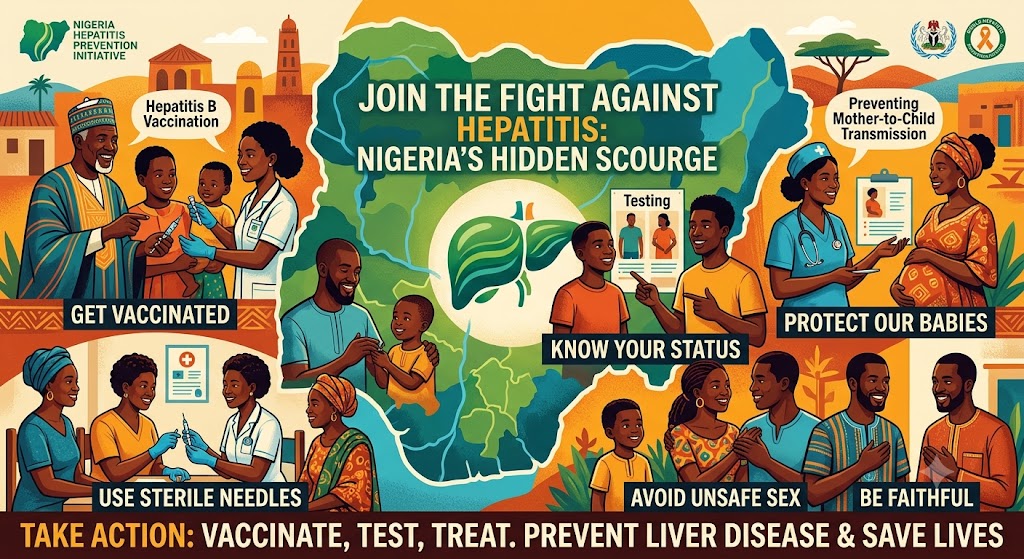
But What Can You Do?
- Get tested, especially if you have never been screened.
- Complete the hepatitis B vaccine series if you are not already protected. You receive one shot, another one month later, and a final dose six months after the first.
- Ensure every child receives the hepatitis B vaccine.
- If you are pregnant and infected, seek treatment and ensure your baby receives hepatitis B immunoglobulin within 72 hours of birth.
- Don’t share sharp objects.
- Practice safer sex, or better yet, be faithful to your partner.
- Encourage pregnant women to attend antenatal care and get screened.
- If diagnosed, seek medical care early and avoid alcohol and unnecessary herbal remedies that may further damage the liver.
Conclusion
Hepatitis may be silent, but its consequences are devastating. With greater awareness, vaccination, early testing, and timely treatment, Nigeria can prevent thousands of cases of liver disease and save countless lives.