
Urinary Tract Infections (UTIs) refer to infections of any part of the urinary tract or system by microorganisms; usually bacteria. The urinary system comprises the kidneys, ureters, bladder, and urethra.
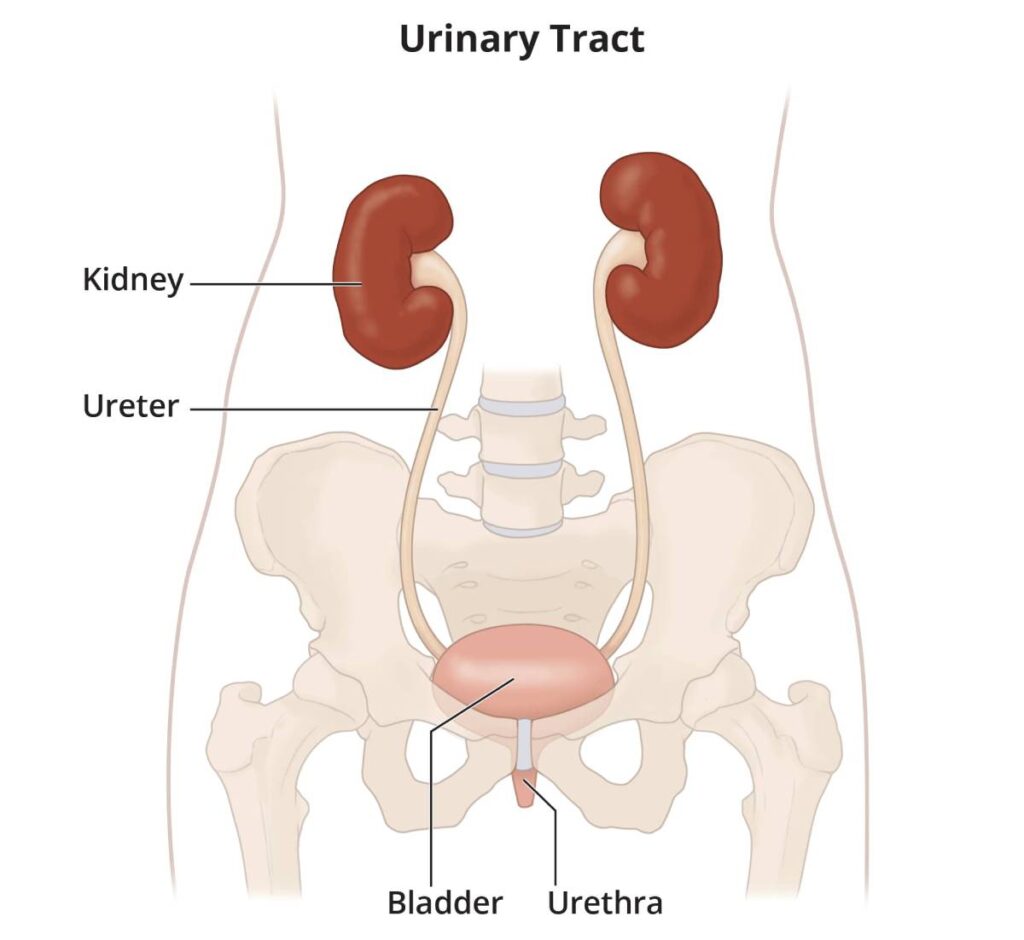
Classification of Urinary Tract Infections
UTIs can be classified based on the part of the urinary tract affected:
- Lower UTI – affecting the bladder (cystitis), or urethra (urethritis)
- Upper UTI – affecting the kidneys (pyelonephritis)
Causes of Urinary Tract Infections
Normal urine is sterile, that is, it does not contain any microorganism or contaminant. However, when infected, it is often due to bacteria from nearby areas of the body e.g. the anus or perineal skin.
In people with weak immunity, UTI may be caused by viruses.
Risk factors for Urinary Tract Infections
The following are factors that increase one’s chances of having UTI
- Female sex – This is because females have a short urethra. In females, their urethral opening is also very close to the anal opening, making UTIs more likely.
- Sexual intercourse
- Urinary tract obstruction e.g. kidney stones, enlarged prostate gland
- Urinary tract abnormalities e.g. bladder diverticulum, fistula
- Indwelling urinary catheter
- Immunosuppression such as in diabetes mellitus, excessive use of antibiotic etc.
- Use of spermicides or douching
Signs and symptoms of Urinary Tract Infections
People with UTIs usually have some of the following features
- Increased frequency of urination
- Painful urination
- Strong and sudden desire to urinate that cannot be postponed or delayed
- Waking up one or more times at night to urinate
- Bloody urine
- Foul-smelling urine
- Flank pain
- Fever
- Nausea & vomiting
- Malaise
Diagnosis of urinary tract infections
The diagnosis of UTI is made by your doctor affect taking a history of your symptoms, performing clinical examinations, and doing some tests.
Some of the tests requested are:
- Urinalysis
- Urine microscopy, culture, and sensitivity
- Abdominopelvic ultrasound scan
- Full blood count
- Cytoscopy
You may not be required to carry out all of these tests. However, the choice of the ones to do are based on your symptoms, their possible causes, and the complications identified or suspected by your doctor.
Treatment of Urinary Tract Infections
UTIs are treated with antibiotics. However, the choice of antibiotics is essentially based on one of your test results – urine microscopy, culture, and sensitivity test. This will ensure you are usually an effective medication; ultimately preventing antibiotics resistance.
How to prevent UTIs
The following lifestyle practices are helpful in preventing UTIs
- Urinating before bedtime and after sexual intercourse
- Avoid spermicidal jellies and bubble baths
- Drink lots of water
- Wipe from front to back (as a female)
A word from HealthFacts to you
UTIs are often silent infections. However, when poorly managed, they can cause serious damage within and outside the urinary system. Ensure you consult your doctor if you find abnormal changes in your urine.
Till next time, stay informed and stay healthy!










 refer to infections of any part of the urinary tract or system by microorganisms; usually bacteria.)