PTSD (Post-Traumatic Stress Disorder) is one of the most misunderstood mental illnesses. Many people claim it for themselves. Others think only soldiers get it. But since the cure for error is to ask rather than to assume this article will be asking and answering 5 pressing questions about PTSD.
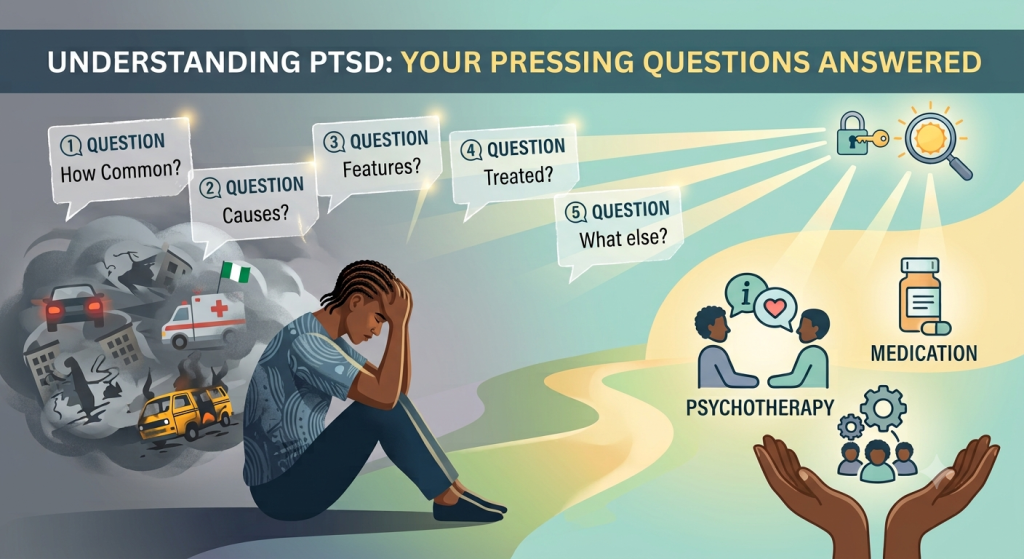
Question 1: How Common Is PTSD?
Even though 70% of people worldwide experience at least one traumatic event during their lifetime only a minority about 5–10% of all people go on to develop PTSD.
Women are about twice as likely as men to develop PTSD, despite men experiencing more traumatic events overall.
Though documentation is poor, we should expect PTSD rates to be rising in Nigeria as insecurity continues to prevail. Read on to see what I mean.
Question 2: What Causes PTSD?
PTSD, from its very name, follows exposure to trauma. This trauma is not mere stress but it is a catastrophic event that leads to threatened or actual death, serious injury, or sexual violence.
Common triggers include:
- Road traffic accidents
- Armed robbery or kidnapping
- Sexual assault
- Domestic violence
- Terrorist attacks
- Natural disasters
- Military combat
Not everyone exposed to trauma develops PTSD. Genetics, previous trauma, social support, and the severity of the event all influence risk.
Question 3: What Are the Features of PTSD?
There are four symptom groups:
- Intrusions: flashbacks, nightmares, distressing memories.
- Avoidance: avoiding reminders of the trauma.
- Negative mood and thinking: guilt, emotional numbness, hopelessness.
- Hyperarousal: poor sleep, irritability, exaggerated startle response, constantly feeling “on guard.”
These symptoms must persist for more than one month and impair daily life.
Question 4: Can PTSD Be Treated?
Yes. PTSD is treatable. Psychotherapy is the first-line treatment.
Medications, particularly certain antidepressants, can also help. Early diagnosis and treatment can help prevent complications like depression, substance abuse, and suicide.
Question 5: If Not PTSD, What Could It Be?
Not everyone who struggles after trauma has PTSD.
Other possibilities include:
- Acute Stress Reaction (symptoms last for less than 3 days)
- Acute Stress Disorder (symptoms lasting less than one month)
- Adjustment Disorder
- Depression
- Anxiety disorders
- Grief reactions
Some distress and even some dysfunction is normal after being exposed to a major stressor, such as in normal grief following bereavement. but symptoms persist or interfere with work, school, or relationships, seek assessment from a qualified mental health professional.
Conclusion
Most people experience trauma, but not everyone develops PTSD. Knowing the symptoms—and knowing that effective treatment exists—is the first step toward recovery. If you think you or someone you know may have PTSD, don’t suffer in silence; seek professional help.