
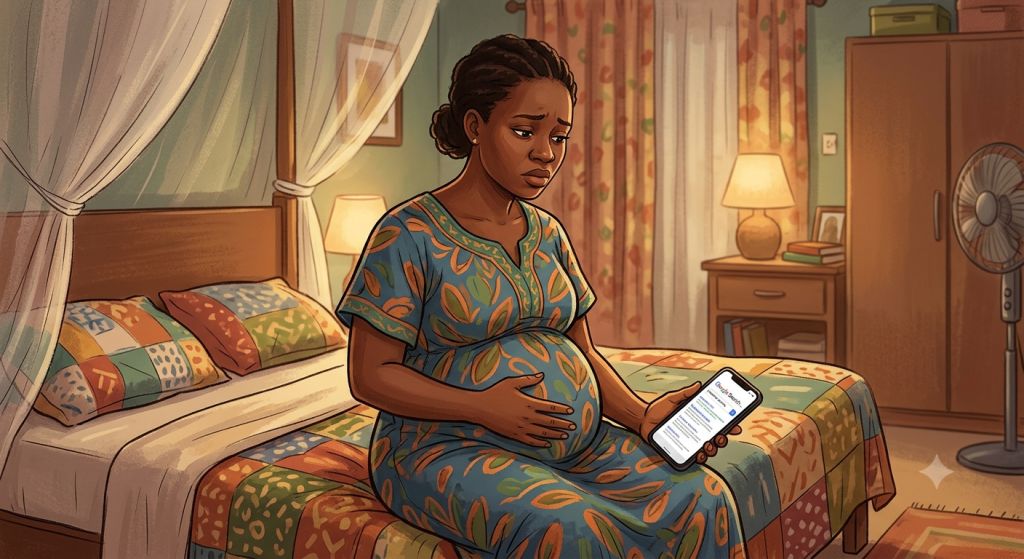
The chills run down your spine as you see those spots of blood on your underwear. Then you remember that worrying cramp you’ve been having for the past two days. Could this be a miscarriage—or perhaps a threatened miscarriage? You know you’ve heard that term somewhere, but you don’t even know which condition is more reassuring.
You’re not alone. About 20% of pregnant women experience bleeding during the first trimester, and these same concerns run through their minds too.
There are near-trivial causes, such as cervicitis, and then there are life-threatening causes, such as an ectopic pregnancy. A threatened miscarriage sits right in an uneasy middle. It usually will not harm the mother, but the fate of the pregnancy is uncertain.
This article explores the topic to provide some solid ground of fact to help you face that uncertainty.
What Is Threatened Miscarriage?
But what is a threatened miscarriage? It is any vaginal bleeding before 20 weeks of pregnancy in which the cervix remains closed. There may or may not be accompanying lower abdominal cramps or back pain.
It is called a threatened miscarriage because the pregnancy is being threatened. About 50% of these pregnancies will unfortunately be lost. However, the other 50% will continue and may be carried to full term.
Symptoms of Threatened Miscarriage
Common Warning Signs
- Vaginal bleeding or spotting.
- Mild lower abdominal cramps or back pain.
- Passing small blood clots without passing pregnancy tissue.
Please note that some women experience only light spotting.
What Causes Threatened Miscarriage?
Common Risk Factors
Often, no definite cause is found.
Some causes, however, are treatable. These include maternal infections such as genital tract infections, urinary tract infections, and malaria.
Other causes may not be amenable to immediate treatment. These include:
- Chromosomal abnormalities in the embryo.
- Hormonal problems.
- Uterine abnormalities or fibroids.
- Smoking, alcohol, and poorly controlled chronic illnesses.
Question: Is it true that working or having sexual intercourse can cause a threatened miscarriage?
Answer: No. Ordinary activities such as walking, working, or sexual intercourse rarely cause a threatened miscarriage.
How Is Threatened Miscarriage Treated?
Testing
First, you will have an ultrasound scan to determine whether the embryo is still alive and whether the cervix remains closed.
Your doctor may also request blood tests to look for infections, hormonal problems, or other possible causes.
Treatment
You may be observed in the hospital for a short while to see whether the miscarriage progresses. Remember that about half of threatened miscarriages progress to miscarriage, while the other half continue successfully.
If the pregnancy remains stable, you will usually be discharged and advised to:
- Rest.
- Register for antenatal care if you have not already done so.
- Receive progesterone therapy where appropriate.
- Treat any underlying conditions that may increase the risk of miscarriage.
- Quit smoking, alcohol, and any other illicit drug use.
When Should You Go to the Hospital?
After your first evaluation—or indeed at any time during pregnancy—watch out for these warning signs. They may indicate a progressing miscarriage, an infected miscarriage, an ectopic pregnancy, or another serious complication.
- Heavy bleeding.
- Severe abdominal pain.
- Passing pregnancy tissue.
- Fever or foul-smelling vaginal discharge.
- Dizziness or fainting.
Conclusion
A threatened miscarriage can be one of the most frightening experiences in early pregnancy, but it is not the same as a miscarriage. Many women who experience bleeding in early pregnancy go on to have healthy pregnancies and healthy babies. The most important thing is not to ignore the symptoms or assume the worst. Seek medical attention promptly so that the cause can be identified and, where possible, treated. In pregnancy, timely evaluation can make all the difference.