In the last post, we learned the functions of the kidney. We also saw what kidney disease means for affected individuals as well as for populations. In this post, we will be going a bit further.
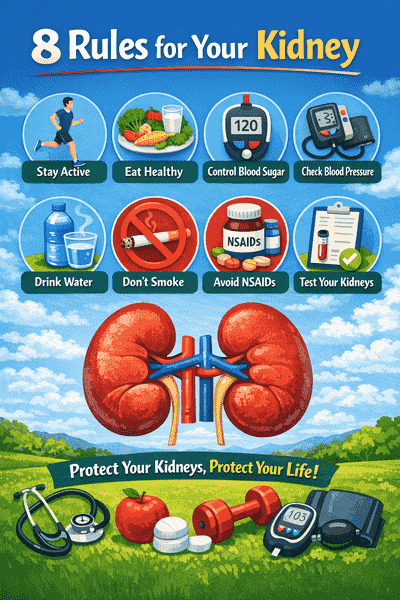
In commemoration of this year’s World Kidney Day, the International Society of Nephrology, together with other partners, came up with ‘8 golden rules of prevention’ to protect your kidneys.
Those are the simple rules we’ll be looking at today. Please stick with us.
1. Remain active to keep fit
Maintaining an active lifestyle helps you maintain a healthy weight and keep blood pressure and blood sugar in check. This protects your kidneys from common risks that can lead to chronic kidney disease. You need to have 150 minutes of moderate intensity or 75 minutes of vigorous intensity exercise a week to qualify as an ‘active person’. A simple way to achieve this is to aim for 30 minutes of brisk walking on most days of the week and then to incorporate muscle-strengthening exercise 2 days a week.
2. Eat a healthy diet
For simplicity, observe these dos and don’ts.
Do eat nuts and legumes. Do eat lean meat like skinless chicken, rabbit, and snail. Do eat oily fish, though not necessarily fried. Do eat fruits and vegetables with every meal. Do take low-fat dairy like milk or yoghurt with each meal.
But avoid heavily refined foods like noodles, biscuits, and white bread. Cut down on foods with added sugars like soft drinks and confectioneries. Deep-fried foods are also laden with trans fats and unsaturated fats, which you should cut down on.
REDUCE SALT TO NO MORE THAN ONE TEASPOON A DAY. You can achieve this by reducing how much you eat out, since you cannot control how much salt the restaurants will use, but you can regulate how much you yourself use. If I could recommend you a diet to protect your kidneys, that would be the DASH diet. Find out more about it here.
3. Check and control your blood sugar
Diabetes is the biggest risk factor for chronic kidney disease worldwide. If you have risk factors for diabetes, such as having a family member with diabetes, being overweight, or being physically inactive, you should undergo diabetes screening by checking your blood sugar in a hospital.
If you already have diabetes, you have to watch out to ensure your blood sugar remains controlled. How do you do that? Like this: monitor your blood sugar regularly; don’t miss follow-up clinics; be regular with your medications; remain physically active; eat healthily.
4. Check and control your blood pressure
High blood pressure is another major risk factor that can cause kidney damage. And 1 in 3 Nigerian adults have hypertension. So you must be on the lookout. Make checking your blood pressure part of your routine health check-up. If it is in fact raised, see a doctor to confirm the diagnosis. If a doctor has confirmed that you have hypertension, she may ask you to commence medications. Or instead, she may simply ask you to make changes in your lifestyle like diet and exercise. Please comply and remain faithful to clinic visits.
5. Drink enough water
Because of our very hot and humid environment, Nigerians need between 2 to 4 L of water a day. Sometimes you may even need up to 6 L. This comes to 4 to 8 sachets of water daily. Also, it is best to just drink whenever you feel thirsty.
Remember that the best fluid to hydrate with is water—not alcohol. Alcohol makes you lose water, and it is bad for your health in a myriad of different ways.
Not soft drinks—soft drinks add excessive calories, spike your blood sugar, and leave you feeling hungry soon after. Stick with good old clean water—best served chilled.
6. Don’t smoke
Cigarette smoke contains up to 7000 chemicals, 70 of which can cause cancer, including kidney cancer. Nicotine is one of the chemicals in cigarettes. This can constrict the blood vessels which supply the kidneys and lead to long-term kidney damage and hypertension.
7. Don’t take NSAIDs regularly
NSAIDs stands for non-steroidal anti-inflammatory drugs. They include common medications like diclofenac and ibuprofen. They are commonly used for pain relief. But these powerful medications can damage the kidneys if abused or if used for a long time. If you have pain or any other condition for which you have to take these drugs for more than a few days, then you should see a doctor who can prescribe safer alternatives.
8. Check your kidney function if you are at high risk of kidney disease
The following groups are at high risk for kidney disease: those with diabetes, hypertension, obesity, and a family history of kidney disease. You can run a simple and cheap blood test called an EUCr to evaluate your kidney function. When you come for your routine clinics, your doctor can decide how often to run this test. This can help catch disease early and so begin timely intervention.
Conclusion
Prevention is the best cure—the cheapest and the least painful.
Learn more about common causes of kidney disease from our article here.