
People react to medications in all sorts of ways. But there is no reaction doctors dread more than Stevens–Johnson syndrome (SJS) or its close and more intense cousin, toxic epidermal necrolysis (TEN). We will be treating the two conditions together in this article as SJS/TEN. This is because they are both on the same spectrum of disease involving destruction of the epidermis. This syndrome affects the skin and mucous membranes, causing burning, blistering and shedding of the skin involving 10–30% (sometimes less or more) of the body surface area. Eventually, complications can set in, requiring intensive care and sometimes causing death.
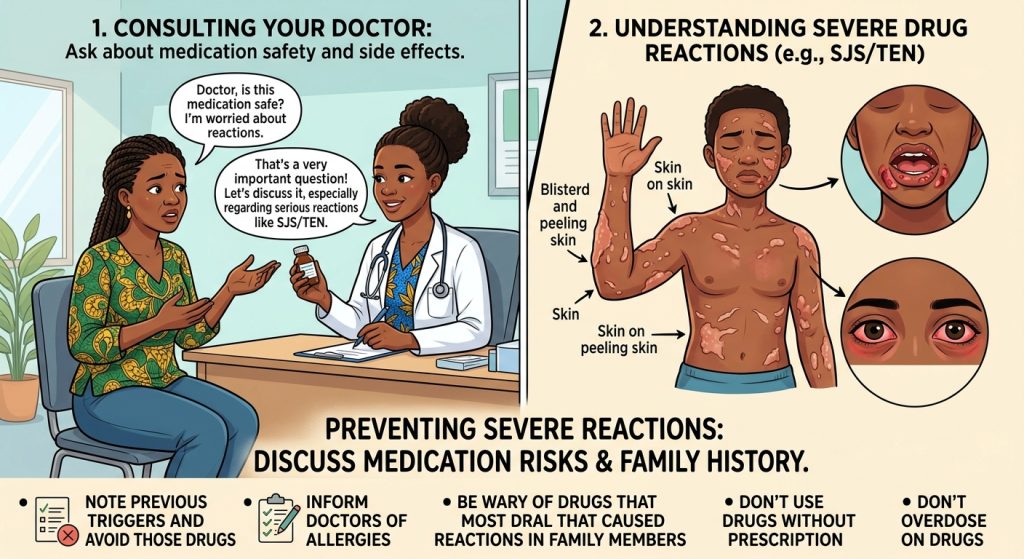
Causes
The chief cause of SJS/TEN is the use of medications like:
Antiepileptic drugs: These include sodium valproate, phenobarbital, phenytoin and carbamazepine.
Antibiotics: Especially sulfa-containing antibiotics like silver sulfadiazine, Septrin and Fansidar. Other common antibiotics can also cause it, like Amoxiclav and ciprofloxacin.
Antivirals: Acyclovir and the anti-HIV medication nevirapine are examples.
Many other drug classes, like antidepressants, anti-gout drugs and chemotherapy agents, have also been implicated.
Less commonly, SJS/TEN may follow an infection such as one caused by the bacterium Mycoplasma pneumoniae. This organism causes a rare sort of pneumonia.
A previous attack of SJS/TEN increases your risk for another one. Therefore, note what medication triggered the first attack and avoid it.
A history of SJS/TEN in a close family member may indicate that you are also at risk.
Symptoms
SJS/TEN usually follows the use of a triggering medication between a few days and 4 weeks after you begin to use that drug.
The first stage is often a flu-like illness. This involves fever, muscle and joint aches, and a general feeling of illness.
Soon, more distinctive symptoms follow.
The first is often a sensation of burning in the skin, eyes and mucous membranes that line the mouth, nose and female genitals.
Next, blisters may follow.
These blisters combine with the skin falling off in sheets.
In the eyes, there may be redness, discharge or pain.
SJS/TEN can also affect internal organs like the kidneys, adrenals and even the lungs, as the patient may go into shock and organ failure.
Treatment
SJS/TEN is a serious illness with up to 30% mortality. But it is treatable.
While there is no definite cure, healthcare providers can provide supportive care to support damaged body functions.
So, they will pay attention to fluid, electrolyte and temperature balance.
They will treat infections where such have set in.
Likewise, they will provide pain control and psychotherapy, which is fitting for such a traumatic experience.
Some drugs, like cyclosporine, when given early, are suspected to slow the progress of SJS/TEN. This is one reason to recognize this disease on time so you can receive early intervention in the hospital.
Prevention
Because SJS/TEN is an unpredictable reaction to many common and otherwise safe medications, you may not be able to prevent the first attack. But:
- Note previous triggers and avoid those drugs, as well as other related drugs in a similar class.
- Always inform your doctor or any prescriber about this previous drug reaction.
- If you have a family member who has had SJS/TEN after using a drug, be wary of that medication, as you may also be genetically predisposed.
- Do not use drugs without a prescription.
Note that in the future, when personal genetic analysis becomes possible and affordable, it may be easier to prevent SJS/TEN by identifying those with a genetic predisposition to it. Till then, follow these simple precautions.
If you are interested in learning about the safe use of drugs, why not check out our article on antimicrobial resistance?







. Discover dangerous drug triggers, key symptoms, and life-saving prevention tips.)