Guillain-Barré syndrome (GBS) is a rare disease of the nervous system characterized mostly by weakness or paralysis and occasionally abnormal nerve sensations. It usually occurs after mild respiratory or gastrointestinal infections. It is a relatively uncommon disease, affecting about 1–2 people per 100,000 each year. Yet, because of the severity and duration of paralysis and the possibility of death, this condition warrants our attention.
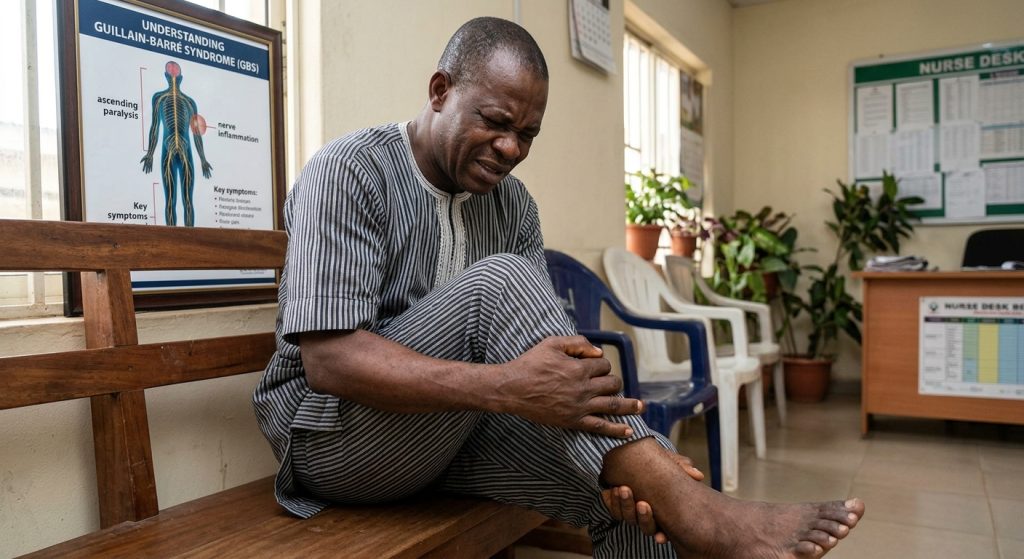
What Does Guillain-Barré Syndrome Look Like?
The disease often begins 2–4 weeks after a respiratory or gastrointestinal infection.
It commonly starts with tingling in the feet and sometimes the fingers.
There is also weakness or paralysis, which usually begins in both legs and can rapidly involve the upper legs and upper body over a course of hours to days. Hence, it is called ascending weakness.
There may be associated pain in the affected areas.
The trunk, arms and head may be weakened, leading to difficulty moving, swallowing or, in severe cases, controlling eye movements.
Difficulty breathing is a serious possibility when the muscles of respiration become paralysed. Without appropriate respiratory support, this can be fatal.
What Causes Guillain-Barré Syndrome?
Campylobacter jejuni: This bacterium commonly causes gastrointestinal illness marked by diarrhoea, abdominal discomfort and sometimes vomiting or fever.
Cytomegalovirus (CMV): This virus can cause a range of illnesses, including flu-like symptoms and, less commonly, pneumonia.
Possibly some vaccines: Some data suggest that the risk of developing GBS may rise slightly after certain vaccines. However, this risk is extremely small, and the benefits of vaccination generally outweigh this potential risk.
The chief problem in GBS is that the body is damaging parts of its own nerves. This causes those nerves to malfunction. The malfunction therefore appears as weakness, abnormal sensations, pain and paralysis. The scientific understanding is that portions of some germs resemble parts of our nerves. So, when the body fights those germs during an infection, it accidentally ends up damaging itself as well, since its defence mechanisms cannot perfectly distinguish between self and similarly appearing germs.
How Is Guillain-Barré Syndrome Treated?
At the moment, there is no definitive cure, but treatments can hasten recovery. In the meantime, the aim is to support the patient through:
- Pain control
- Respiratory support: with oxygen and, where needed, a ventilator
- Plasma exchange: This removes harmful antibodies from the blood and can hasten recovery.
- IVIG: Intravenous immunoglobulin (IVIG) also hastens recovery and is potentially safer and easier to administer than plasma exchange.
Can People Recover?
Most people recover from GBS, though this may take weeks or months. Some people will still have significant weakness or paralysis even 18 months after the onset of the disease.
When to Seek Help
When next you notice tingling and rapidly worsening weakness in your feet or legs, don’t sleep it off. It may be Guillain-Barré syndrome. Get to the hospital as soon as you can. Stay alert. Stay safe.
Check out our article on Parkinson’s disease.