1. Introduction
Besides diabetes, there is another disease of the pancreas everyone must know about. This is pancreatic cancer.
The pancreas is an organ in the abdomen that is involved in the digestion of food as well as the hormonal control of blood sugar.
In pancreatic cancer, the cells of the pancreas multiply in an uncontrolled manner. Because of the sensitive location and functions of the pancreas, death is sadly a very common outcome.
Why Should I Care About Pancreatic Cancer?
- It is the 6th deadliest cancer worldwide.
- The 5-year survival rate after diagnosis is less than 5% in Nigeria.
- It is almost always diagnosed at a stage too late for rescue.
- Some risk factors and early symptoms may be recognised in time to prevent the disease or facilitate early diagnosis.
2. Key Warning Signs and Symptoms
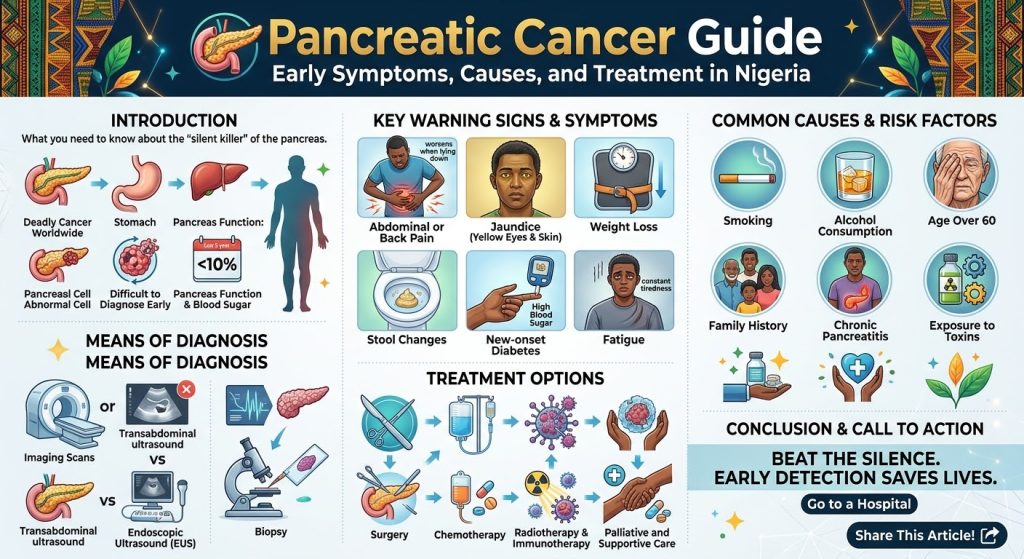
- Abdominal or back pain: Pain may worsen when lying down as the cancer invades the plexus of nerves behind the pancreas.
- Jaundice (yellowing of the eyes or skin): This occurs when the cancer blocks the flow of bile. It may also indicate that the cancer has spread to the liver.
- Weight loss: This may be due to poor digestion and is also a common feature of cancer in general.
- Stool changes: Stool may become paler, smellier and float more in the toilet.
- New-onset diabetes: This may be explained by pancreatic dysfunction.
- Fatigue: This may result from poor digestion and is also a general feature of cancer.
3. Common Causes and Risk Factors
Although there is no single known cause, the presence of these factors increases the likelihood of developing pancreatic cancer:
- Age over 60 years
- Smoking
- Alcohol consumption
- Chronic pancreatitis
- Family history
- Diabetes
- Exposure to toxins and chemicals
4. Means of Diagnosis
Imaging scans
- CT scan or MRI: These are the more conventional methods of imaging used to investigate pancreatic cancer. A simple transabdominal ultrasound is not usually considered sufficient to diagnose pancreatic cancer.
- Endoscopic ultrasound (EUS): An ultrasound probe is inserted through the mouth into the stomach or small intestine to view the neighbouring pancreas. This method is also sometimes used.
Biopsy
A sample of tissue is taken, either during EUS or surgery, and sent to the laboratory for a definitive diagnosis of cancer
5. Treatment Options
- Surgery: Imaging will help confirm how far the cancer has spread and whether it can be surgically removed or is “resectable”.
- Chemotherapy: This is a necessary option when the tumour is unresectable. Even in cases where surgery is performed, chemotherapy may also be administered either to reduce the tumour mass and make surgery easier or to prevent recurrence after surgery.
- Other options: These include radiotherapy and immunotherapy.
- Palliative and supportive care: Sometimes, in very advanced disease, the only care that can be offered is aimed at cushioning the effects of complications, treating infections, relieving pain and providing psychological and spiritual support, together with other supportive and end-of-life care.
6. Conclusion and Call to Action
We can beat the silence of pancreatic cancer. Pay attention to your body and be quick to go to the hospital.
Share this article too, so we can beat the silence!