
Climate change is a big problem. The last decade has been the hottest in human history. Extreme weather events are now commonplace. I mean heatwaves, urban flooding, droughts and others. Advocates for climate action continue to call for sustainable living. Governments everywhere are trying to reduce their carbon footprint (or not).
But what can you do? Yes, you. The truth is that you can also fight climate change by adopting simple eco-friendly habits. That’s what this article will show.
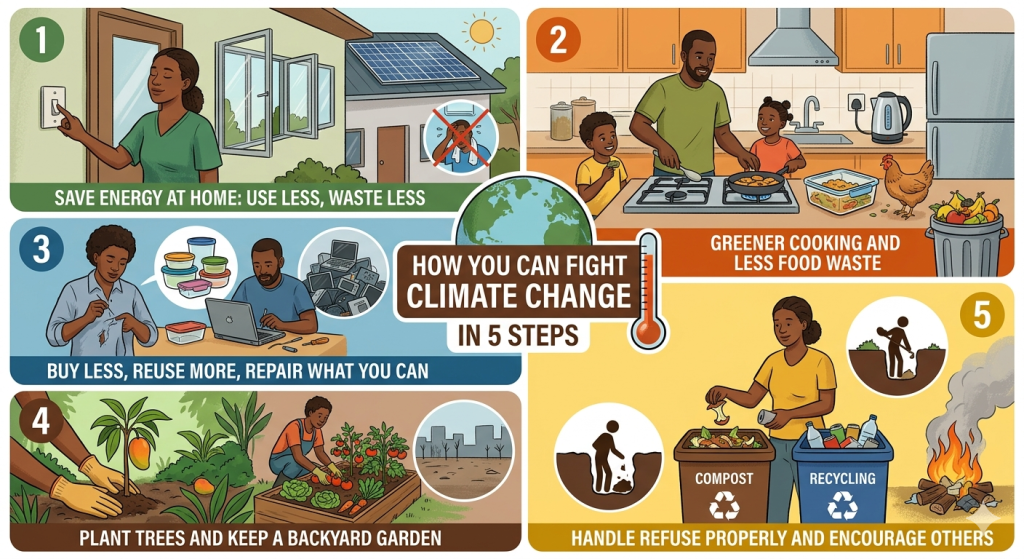
5 simple eco-friendly habits YOU can use to fight climate change
1. Save Energy at Home: Use Less, Waste Less
- Don’t waste power: Turn off bulbs, sockets, and appliances when not in use. Less power used means fewer fossil fuels burned and, consequently, less global warming.
- Seek alternatives to petrol and diesel generators: In the long run, this will save both your money and the environment. Consider rechargeable bulbs for lighting and solar inverters for heavier demands such as charging devices and refrigeration.
- Cool your house wisely: Use your air conditioner only when necessary. When building your house, ensure there is good cross-ventilation with large windows and a high roof made with reflective roofing sheets. This will help keep your home naturally cooler.
2. Greener Cooking and Less Food Waste
Let’s come to your kitchen now.
- Use cleaner cooking fuel: Gas and electricity are much cleaner than firewood or charcoal. Use them instead. You’re protecting not just the climate but also your air quality.
- Don’t waste food: Wasted food decomposes into methane, a potent greenhouse gas that traps heat in the atmosphere. To prevent wastage, especially where power supply is erratic, cook only as much food as you can finish at a time. Leftovers can be fed to livestock such as chickens. You can also explore other methods of preservation such as drying, either by sunning or grilling, pickling in brine, or milling food into powder.
3. Buy Less, Reuse More, Repair What You Can
When you buy more, industries make more. That production comes at a cost to the environment. It means more fossil fuels burned and more pollutants released. More goods also mean more trash. Much of this waste ends up in landfills, which are sources of methane. If you burn your trash, you release carbon dioxide into the atmosphere. These gases blanket heat around the earth. So what can you do instead? Reduce, reuse, and repair.
- Reduce: Think before you buy: Do I really need this? When you are pressured or enticed to make a purchase, wait for 24 hours first. This simple habit can prevent impulse buying and the buyer’s regret that often follows.
- Reuse: Are you among those Nigerians who reuse nylon bags, plastic containers, and newspapers? Please keep it up. Before throwing anything away, ask yourself whether it can be reused or repurposed. If you can no longer use it, perhaps you can give it to your neighbour or even sell it. This is a good culture we have as Nigerians. Seek to advance it and don’t be ashamed.
- Repair: Many damaged items can still be saved. Don’t be too hasty to throw away torn clothes, damaged electronics, furniture, or other household items. Learn simple repair skills such as mending small tears and carrying out minor fixes on gadgets.
4. Plant Trees and Keep a Backyard Garden
- Plant trees at home: Nigeria has massive forest resources, which we are losing every day. This is a shame because trees absorb carbon dioxide from the atmosphere and store it as inactive carbon. They also help prevent erosion and flooding by holding the soil together. Trees provide local cooling too. Have you ever sat under a tree on a hot day? You’ll see that it’s better than any plastic canopy or metal roof. So plant trees in your compound. Fast-growing fruit trees such as guava, citrus, and cashew are widely available in Nigeria and can provide both shade and food.
- Keep a backyard garden: A backyard garden offers many of the benefits of a tree, though on a smaller scale. In addition, if you grow some of what you eat, you will make fewer trips to the market and reduce the emissions associated with transporting food.
5. Handle Refuse Properly
- Don’t burn your refuse: Everybody does it. But it’s still wrong. It releases harmful pollutants into the atmosphere, including carbon monoxide and particulate matter.
- Don’t dump refuse in streams or gutters: This pollutes waterways and contributes to flooding. You too should consider whether someone has not dumped refuse into the river upstream from you!
- Separate your waste: Sort vegetable scraps and other organic matter for composting, leftovers for livestock or deep burial, reusable and recyclable materials, and inorganic waste for proper disposal.
Conclusion
We have seen 5 simple eco-friendly habits to take up. If you live like this, I live like this and your neighbours live like this, don’t you think that we would soon make a sizable impact?