The sun produces various forms of energy. We are all familiar with light and heat, for example. But there is another kind of energy the sun produces. It is invisible to the naked eye, and it is called ultraviolet (UV) radiation. Some exposure to UV rays helps your body produce vitamin D, but too much can damage your skin and eyes, and may even lead to skin cancer. This article will show you how to stay safe from ultraviolet rays.
Why Should You Care About UV Rays?
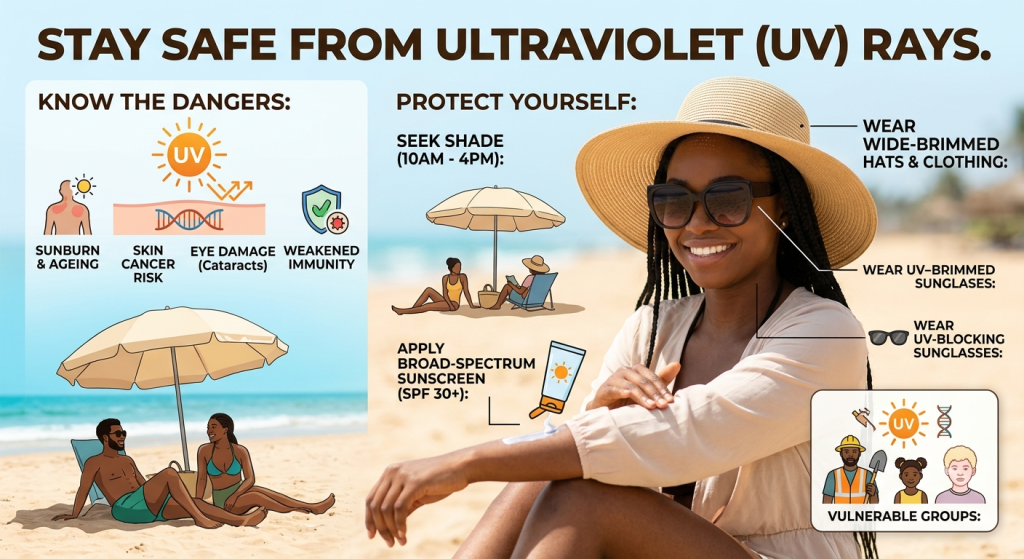
Because of Nigeria’s tropical climate, we are exposed to high levels of UV radiation throughout the year. Yet few people take any precautions, even though UV rays can cause the following:
Sunburn: Amazingly, the cause of sunburn is not the sun’s heat but UV rays. These rays damage the DNA in skin cells, triggering inflammation that appears as the redness, pain, and peeling we call sunburn.
Premature skin ageing (wrinkles and dark spots): Over time, repeated UV-induced DNA damage hinders the skin’s ability to repair everyday wear and tear, causing it to age more quickly.
Skin cancer: Skin cancer can result from UV-induced DNA damage. Because of melanin—the dark pigment abundant in African skin—Black people have a lower risk of skin cancer than lighter-skinned populations. However, melanin is not 100% protective.
Eye damage: UV rays can damage the conjunctiva, cornea, and even the lens of the eye, leading to conditions such as pterygium, photokeratitis, and cataracts.
Weakened immune response in the skin: UV rays also damage immune cells that normally reside in the skin. This weakens the skin’s natural defences, making it less able to clamp down on newly developing cancer cells or resurging viruses such as herpes simplex, which causes cold sores.
Who Is Most at Risk?
Anyone can be affected, but the risk is greatest for people who spend long hours in direct sunlight, including:
- Outdoor workers such as farmers, traders, construction workers, and traffic officers.
- Children who play outdoors for long periods.
- Athletes who train or compete outside.
- People with albinism, who are at particularly high risk because they have very little melanin.
How Can You Protect Yourself?
- Seek shade, especially between 10 a.m. and 4 p.m., when UV rays are strongest.
- Wear a wide-brimmed hat and clothing that covers your arms and legs.
- Apply a broad-spectrum sunscreen with SPF 30 or higher to exposed skin.
- Wear sunglasses that block both UVA and UVB rays.
Conclusion
The sun gives life to all the earth. But that lovely rose comes with a thorn. Do you then throw away the flower because it has thorns? No—you simply avoid the thorns. In the same way, you can—and should—continue to enjoy the sun. Just do so wisely, observing these simple precautions to protect your skin and eyes from harmful UV rays.